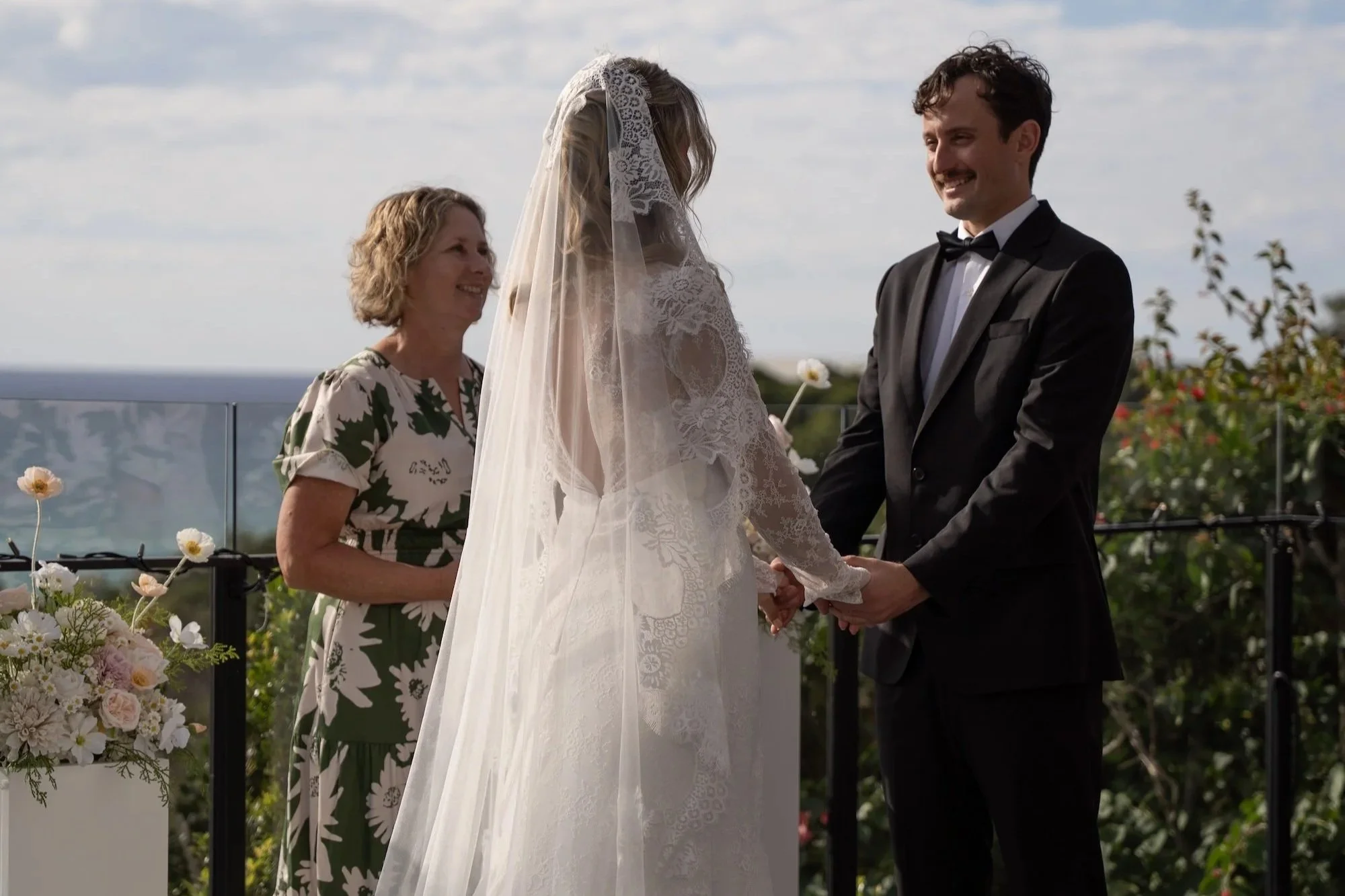
What Does a Marriage Celebrant Actually Do?
When most couples start planning their wedding, one of the first questions they ask is, “What exactly does a marriage celebrant do?”
As a Brisbane marriage celebrant, I’m often surprised by how many people think celebrants simply turn up on the day, conduct the ceremony and sign a few documents. While creating a beautiful and memorable ceremony is certainly part of the job, there is much more happening behind the scenes to ensure your marriage is legally valid in Australia.
A Marriage Celebrant’s Most Important Role
Only people who are legally authorised under the Marriage Act 1961 can solemnise marriages in Australia. A marriage celebrant plays an important role, not just because of the legal requirements involved, but because your wedding ceremony is one of the most significant moments in your life together.
A celebrant’s role is to guide you through the legal process, explain your obligations and ensure that every step has been completed correctly before your wedding day. From lodging your Notice of Intended Marriage to preparing and submitting your legal paperwork, your celebrant is responsible for making sure your marriage complies with Australian law.
At the same time, we help create a ceremony that reflects who you are as a couple and makes your guests feel included in your celebration.
What Isn’t a Marriage Celebrant Responsible For?
There are a few things that fall outside a celebrant’s role. Marriage celebrants cannot:
Provide migration or visa advice unless they are a registered migration agent.
Obtain legal documents on your behalf.
Become involved in legal matters relating to previous relationships or marriages.
Apply for court orders for you.
These areas require specialised legal or professional advice, and it is important that couples seek assistance from the appropriate experts where needed.
Ensuring Your Marriage Is Legally Valid
One of the most important responsibilities of an Australian marriage celebrant is ensuring that your marriage complies with the Marriage Act and Marriage Regulations.
This includes:
Ensuring your Notice of Intended Marriage is completed correctly and lodged at least one month before your wedding.
Confirming that both parties freely consent to the marriage.
Checking identity documents and any paperwork relating to previous marriages.
Including the required legal wording during your ceremony.
Completing and lodging all marriage documents after your wedding.
Marriage law does change from time to time, which means celebrants must stay up to date with any changes to legislation and best practices. Ongoing training and professional development are essential parts of the role.
What Are Commonwealth-Registered Marriage Celebrants Required to Do?
All Commonwealth-registered marriage celebrants in Australia have legal obligations they must meet to maintain their registration.
These obligations include:
Following the Code of Practice for marriage celebrants.
Completing annual professional development training.
Keeping their registration details up to date.
Advising the Registrar of any circumstances that may affect their registration.
Paying their annual celebrant registration fee.
These requirements help ensure that celebrants continue to provide professional, accurate and up-to-date services to couples getting married in Australia.
Who Can Legally Marry You in Australia?
Under the Marriage Act 1961, there are three categories of people authorised to solemnise marriages in Australia:
Ministers of Religion
Religious ministers from recognised denominations who are registered to conduct marriages.
State and Territory Officers
Government-appointed officers who are authorised to perform marriages.
Commonwealth-Registered Marriage Celebrants
This category includes civil celebrants, as well as some religious celebrants who are not affiliated with a recognised denomination.
A person can only be authorised under one of these categories at any given time.
Choosing the Right Marriage Celebrant
Your celebrant does much more than stand at the front and ask you to say, “I do”.
The right celebrant will make sure your marriage is legally valid, guide you through the paperwork, answer your questions and create a ceremony that feels genuinely personal and meaningful.
Planning a wedding can feel overwhelming at times, but having an experienced celebrant by your side means you can relax, knowing that all of the legal details are being taken care of while you focus on celebrating this exciting chapter together.
If you have any questions about the legal requirements for getting married in Australia or you're looking for a Brisbane marriage celebrant, I’d love to help, contact me anytime.
Trudy the Celebrant x
Frequently Asked Questions About Marriage Celebrants in Australia
What does a marriage celebrant do?
A marriage celebrant is responsible for ensuring your marriage is legally valid under Australian law. They guide you through the legal paperwork, explain the marriage process, conduct your ceremony and lodge the required documents after your wedding.
Can anyone legally marry a couple in Australia?
No. Under the Marriage Act 1961, only authorised celebrants can legally solemnise marriages in Australia. This includes Commonwealth-registered marriage celebrants, ministers of recognised religions and certain State and Territory officers.
What paperwork is needed to get married in Australia?
The most important document is the Notice of Intended Marriage (NOIM), which must be completed and lodged with your celebrant at least one month before your wedding date. You will also need proof of identity, such as a passport or birth certificate, and documents relating to any previous marriages if applicable.
Do marriage celebrants provide legal or migration advice?
No. Marriage celebrants cannot provide migration, visa or legal advice unless they are appropriately qualified and registered to do so. If you need assistance in these areas, you should seek advice from a legal professional or registered migration agent.
How do I know if my celebrant is registered?
All Commonwealth-registered marriage celebrants must maintain their registration with the Australian Government and complete annual professional development to stay up to date with any changes to marriage law and regulations.
Does my celebrant submit my marriage paperwork after the wedding?
Yes. After your ceremony, your celebrant is responsible for lodging all of the required legal documents with the relevant Births, Deaths and Marriages office to officially register your marriage.
How far in advance should we book our celebrant?
Many couples book their celebrant anywhere from 12 to 18 months before their wedding date, particularly for popular spring and autumn weddings in Brisbane and South East Queensland. Even if your wedding is still a while away, it is worth reaching out early to secure your preferred date.
What is the difference between a civil celebrant and a religious celebrant?
A civil celebrant conducts non-religious ceremonies and can create a ceremony that is completely personalised to you as a couple. Religious celebrants generally perform ceremonies according to the traditions and beliefs of their faith.
How do I choose the right Brisbane marriage celebrant?
Choosing your marriage celebrant is about so much more than finding someone who is legally authorised to marry you. Your celebrant will guide you through the paperwork, help create your ceremony and stand beside you during one of the most important moments of your life.
When looking for the right Brisbane marriage celebrant, consider:
Whether their personality and style suit you as a couple.
Their experience and knowledge of Australian marriage law.
Reviews and testimonials from past couples.
How they communicate and support you throughout the planning process.
Whether they take the time to create a ceremony that feels authentic and personal.
Most importantly, choose someone who makes you feel comfortable, listened to and excited about your wedding day. The right celebrant will not only ensure your marriage is legally valid but will also help create a ceremony that feels genuinely like you.